

Ten Leverhulme Early Career Fellowships awarded to Oxford social scientists
08 July 2026
A remarkable ten Leverhulme Early Career Fellowships have been awarded to social scientists at the University of Oxford, across more than five disciplines.
The prestigious scheme offers recipients their first academic post at the beginning of a research career, providing three years of support to undertake a significant programme of research.
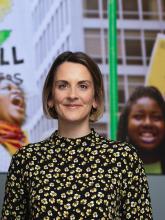
Dr Debbie Hopkins, Associate Professor in Human Geography and Advocate for Research Staff and Research Culture, said:
“We are delighted to celebrate the ten exceptional social sciences researchers who have been awarded the prestigious Leverhulme Trust Early Career Fellowship this year. The success of researchers from five departments and faculties across the Division is a testament to the strength, diversity and excellence of Oxford's social sciences research community.
“These highly competitive awards support researchers who have already demonstrated outstanding research potential and are at a pivotal stage in their careers. The fellowships provide the opportunity to establish themselves as leaders in their disciplines while representing an important investment in the future of the social sciences and their vital contribution to addressing the world's most pressing challenges.
“Over the next three years, the fellows will pursue ambitious and innovative projects that showcase the breadth and diversity of research across Oxford's Social Sciences Division. As they do so, they will benefit from the Division's inclusive, dynamic and collaborative research environment. We look forward to following their progress and seeing the impact of their work.”
Dr Cara Hunter, Faculty of Law
Punishment and Nationhood: Penal Contestations in ‘Brexit Britain’

“Receiving this award means I can carry out in depth narrative research across Britain, based in a world leading criminological research centre.
This will help me illuminate new connections between punishment and nationalism, with implications for criminology and beyond.”
Dr Tina Roushannafas, School of Archaeology
Reimagining Past and Future Landscapes of Britain through Nature Recovery

“Rewilding and regenerative farming projects are generating a wealth of ecological survey data as they monitor the impacts of new approaches to land management.
As a Leverhulme Fellow, I'm excited to explore how these data might reshape our understanding of prehistoric landscapes and inspire more sustainable approaches to land stewardship in the future.”
Dr Emma Lecavalier, Blavatnik School of Government
When States Buy Green: The Political Economy of Decarbonising Public Spending
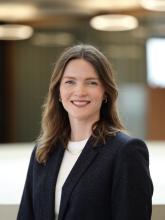
“When we consider how governments tackle the climate crisis, we often think about regulation and subsidies. But governments are also some of the world's largest consumers. Every school, bridge, hospital, and public building represents a purchasing decision and an opportunity by which governments can influence markets.
I’m incredibly grateful to the Leverhulme committee for this opportunity to research how governments are using that purchasing power to accelerate the transition to low-carbon industries, while also revealing the political and legal challenges that come with trying to buy green.”
Dr Tobias Schillings, Department of Social Policy and Intervention
Reforming Solidarity: Healthcare Expansion and Welfare Legitimacy in the Global South
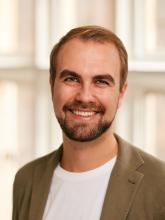
“I am honoured to have been awarded a Leverhulme Early Career Fellowship. My project studies healthcare expansion as a central arena where societies renegotiate solidarity: who is included, state obligation, and whether reforms reduce inequality or reproduce it in new institutional forms.
I am excited to develop this work at Oxford by comparing reform trajectories across the Global South and studying how different institutional designs shape welfare attitudes, trust in the state, and public support for redistribution.”
Dr Mingdan Wu, Oxford School of Global and Area Studies
Entangled Welfare: Why China’s Rural-to-Urban Workers Avoid Welfare Schemes

“I am thrilled to have been awarded a Leverhulme Trust Early Career Fellowship. In my previous research, I examined how people experiencing homelessness in the UK develop everyday tactics of survival. This award allows me to take my interest in welfare and survival into a new geographical and social context in contemporary China.
I am very much looking forward to joining the Oxford School of Global and Area Studies.”
Dr Felipe Krause, Oxford School of Global and Area Studies
Infrastructures of Prohibition: State Power and the Endurance of Drug Control
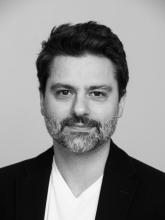
“Receiving a Leverhulme Early Career Fellowship is a tremendous privilege. It provides an invaluable opportunity to pursue an ambitious research agenda on the politics of drug prohibition, and I am delighted to continue building that work at the Oxford School of Global and Area Studies, alongside incredible colleagues.
I was so fortunate to receive outstanding support in developing the proposal from OSGA, the Social Sciences Division's Research Facilitation team, and many generous colleagues who took the time to provide feedback along the way.”
Dr Sabina Barone, Centre for Socio-Legal Studies
Coding Belonging: Biometric IDs and diasporic lives between Senegal and Guinea

“Is biometric identification in Africa crafting inclusive states or introducing new social boundaries?
As a Leverhulme Fellow, I will address this question by examining how an emerging, African-led biometric identification system, the West African Economic Community biometric card, mediates the state's power to legitimise or marginalise belonging vis-à-vis long-established diasporic communities between Senegal and Guinea. This project combines socio-legal, anthropological and decolonial approaches to analyse biometric identification policies, their everyday enactment and the lived experiences of diasporic belonging.”
Dr Kanupriya Sharma, Faculty of Law
Desistance, moral belonging, and women’s lives after prison in postcolonial India

“I am incredibly grateful for this fellowship and the opportunity to pursue a project that is deeply personal to me. It grew out of encounters with women whose lives had been reduced to headlines and criminal convictions, while their experiences before and after prison remained at the margins of mainstream criminological knowledge.
This fellowship allows me to continue working alongside these women and demonstrate that their lives are not simply missing from existing criminological debates, they have the power to reshape how we understand punishment, belonging, and desistance.”
Dr Lena Reim (Oxford Department of International Development) is also a social sciences recipient of a Fellowship.